- [email protected]
- Innovation One, DIFC, Dubai

Blog
Beyond Code: How AI is Reshaping the Software Engineer's Role
Beyond Code: How AI is Reshaping the Software Engineer's Role
The world of software engineering is undergoing a seismic shift, and it's not just about faster code generation. As AI agents become increasingly capable of writing code, the role of the human software engineer is evolving from a code constructor to a master architect of the systems that guide these intelligent tools. This fascinating transformation is redefining what it means to build and maintain complex software.
The Rise of the AI Co-Pilot (and Beyond)
Gone are the days when the primary bottleneck in software development was the sheer act of typing out syntax. With tools like Cursor, Claude Code, and sophisticated agentic workflows now integrated into our development environments, the initial scaffolding of a distributed streaming pipeline or a complex API integration can be rapidly generated by AI. These agents can:
- Navigate entire code repositories
- Generate comprehensive test coverage
- Analyze stack traces to pinpoint errors
- Propose intelligent refactors
Simply describing a desired functionality in plain English can result in a credible starting point for code, dramatically accelerating the initial implementation phase. This begs the question: if AI is becoming the primary author of local system logic, what's left for the human engineer?
From Code Writer to System Designer: The New Mandate
The answer lies in a fundamental shift from constructing individual lines of code to designing the boundaries and frameworks within which AI agents operate. Think of AI as a powerful, albeit sometimes naive, computational engine. It needs direction and clear constraints to perform useful work. Without them, it risks generating code that is syntactically correct but semantically flawed, leading to what can be termed 'operational entropy' – the accumulation of stale assumptions and conflicting contexts.
This is where the human engineer's new mandate comes into play: designing equilibrium. Instead of meticulously crafting every function, engineers will increasingly focus on:
- Defining Data Contracts: Establishing precise agreements about data structures, schemas, and expected behavior ensures that AI-generated transformations align with business logic.
- Implementing Feedback Loops: Creating robust mechanisms for AI agents to receive clear, actionable feedback, whether through failing tests, evaluation metrics, or explicit error signals.
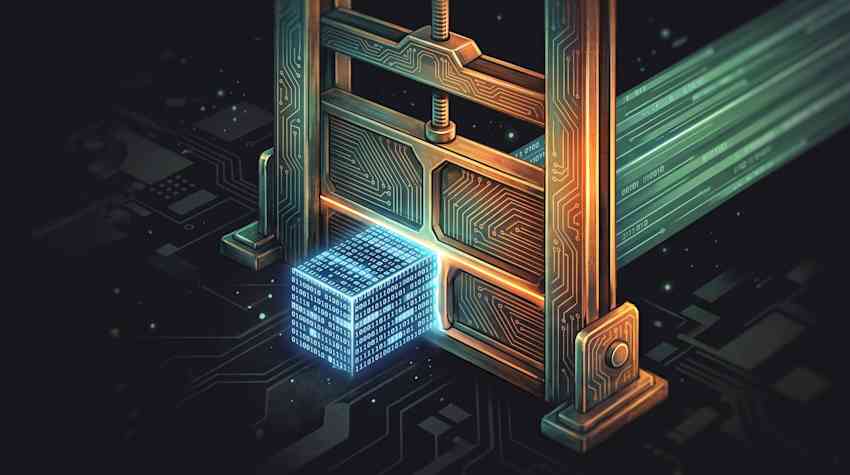
- Building Containment Fields: Designing systems with strict semantic layers, immutable event logs, idempotent APIs, and deterministic state machines to limit the AI's assumptions and guide its output.
- Understanding the 'Three-Body Problem' of Enterprise Logic: Recognizing that complex systems are interconnected and that changes in one area can have unpredictable effects elsewhere. Engineers must design systems that account for these interdependencies.
The analogy of the three-body problem in physics is particularly apt. Just as predicting the motion of three celestial bodies is far more complex than two, understanding the intricate interactions within enterprise software requires a higher level of abstraction and careful system design.
The Value of Human Ingenuity in the Age of AI
The perceived threat of AI replacing software engineers often overlooks the crucial role of human oversight and design. While AI can generate motion – code that runs and passes basic tests – it's the human engineer who ensures that motion translates into useful work. The ability to anticipate edge cases, understand nuanced business requirements, and design systems that maintain coherence across complex, dynamic environments remains uniquely human.
As AI continues to democratize code generation, the value of software engineering will not diminish; it will become more visible. The engineers who excel will be those who can build the guardrails, define the rules, and create the structured environments where AI can truly shine. They will be the architects of intelligent systems, ensuring that the code generated by autonomous agents leads to success, not chaos.
This insight is drawn from an article by Ananth Packkildurai, a data engineering leader and author of Data Engineering Weekly, who shares valuable perspectives on modern data platforms and AI-driven architectures.
Can You find Now