- [email protected]
- Innovation One, DIFC, Dubai

Blog
Visa's AI Security Harness: Automating Vulnerability Fixes at Lightning Speed
Visa's AI Security Harness: Automating Vulnerability Fixes at Lightning Speed
In a move that could redefine software security, Visa has unveiled its open-source Visa Vulnerability Agentic Harness (VVAH). This powerful AI-driven tool doesn't just find vulnerabilities; it writes the fixes and then rigorously tests them against potential exploits, all before a human even gets involved. This represents a significant leap in the speed and automation of cybersecurity, tackling the growing challenge of fixing software flaws faster than they can be exploited.
The Bottleneck Has Moved: From Discovery to Remediation
For years, the cybersecurity industry has focused on the speed of vulnerability discovery. However, as Rajat Taneja, Visa's president of technology, points out, "AI is finding vulnerabilities faster than humans can in the history of our technology industry. The new bottleneck is fixing and proving we have fixed things." This is precisely the problem VVAH aims to solve. By automating the remediation and validation process, Visa is dramatically shrinking the window between identifying a threat and securing against it.
VVAH's development was spurred by Visa's participation in Anthropic's Project Glasswing, where AI models demonstrated a remarkable ability to chain minor weaknesses into exploitable attacks. Recognizing this power, Visa decided to build a harness that could not only identify these issues but also autonomously generate and validate fixes.
How VVAH Works: An Automated Security Pipeline
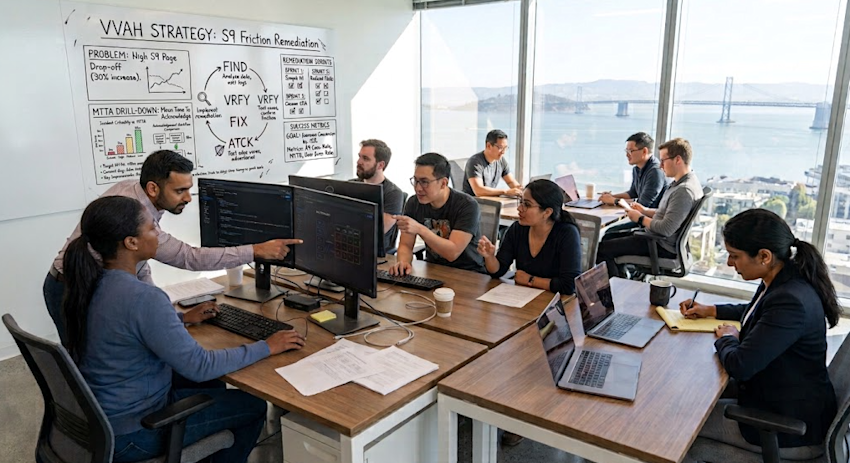
The VVAH operates through an impressive 11-stage pipeline:
- Discovery: AI models scan code for potential vulnerabilities.
- Verification: The identified issues are confirmed as actual threats.
- Remediation: The AI generates code to fix the vulnerability.
- Validation: An adversarial panel of AI agents then attempts to exploit the vulnerability *after* the proposed fix has been applied, ensuring the patch is effective.
- Iteration: If the fix fails, the process feeds back into the remediation stage with learnings from the failed attempt.
This entire loop, by default, ships with the tool. While some security experts, like Steve Wilson, advocate for human "gates" before any automated changes are made, Visa emphasizes that VVAH is designed for authorized operators in controlled environments. Humans remain in the loop at critical junctures: before running the tool, during patch review, and before any code is merged into production. Visa's stance is clear: "Our goal is to help security teams work at AI speed, not to replace them."
Key Innovations and Benefits of VVAH
Visa's VVAH brings several groundbreaking features to the table:
- Automated Remediation: Dramatically reduces the time and effort required to fix vulnerabilities.
- Adversarial Validation: Ensures fixes are robust by having AI actively try to break them.
- Mean Time to Adapt (MTTA): Introduces a critical metric focused on the speed of response and resolution, not just detection. Visa claims this can shrink resolution times from weeks to hours.
- Model Agnosticism: VVAH can work with various AI models, including those from Anthropic, OpenAI, and open-weight alternatives, offering flexibility and avoiding vendor lock-in.
- Contextual Prioritization: Integrates with CMDB data, threat models, and business risk assessments to help organizations prioritize which vulnerabilities to fix first.
The tool has already gained significant traction on GitHub, showcasing its appeal to high-profile companies seeking to bolster their defenses.
The Future of AI in Cybersecurity
Visa's proactive approach with VVAH reflects a broader trend: the increasing reliance on AI to manage complex cybersecurity threats. The company is not only contributing VVAH to initiatives like Nvidia's Open Secure AI Alliance but also expanding its consulting services to help organizations adopt and mature their AI security practices. As Taneja aptly puts it, "Finding vulnerabilities is no longer the hardest part. Speed to remediation is the new battleground."
VVAH represents a significant stride forward, demonstrating how AI can move beyond just identifying threats to actively neutralizing them, ensuring that our digital infrastructure can keep pace with the ever-evolving threat landscape.
Can You find Now